equipment
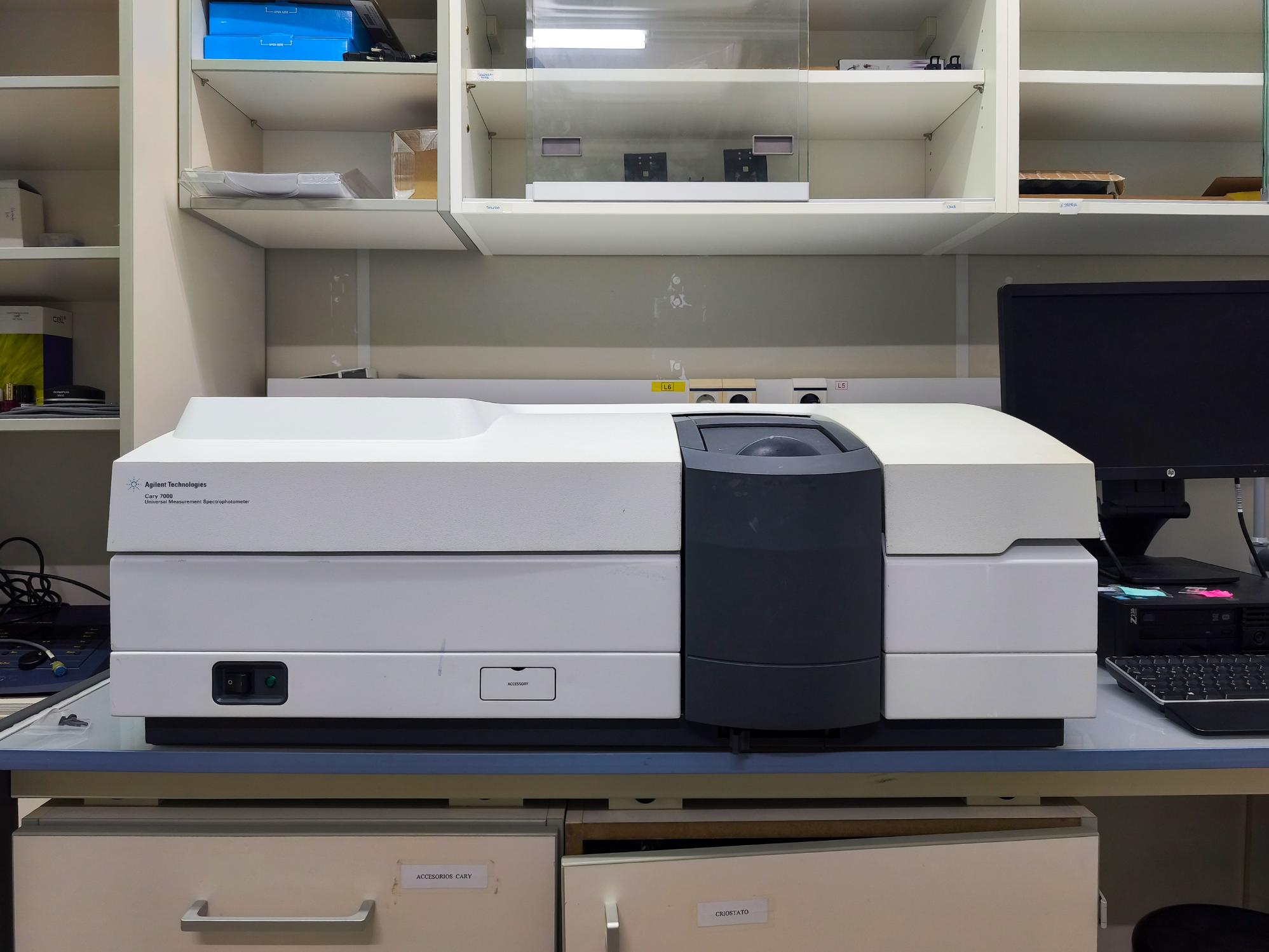
Cary 7000 (Agilent): High-performance double beam UV-Vis-NIR spectrophotometer (from 175 to 3300 nm) for the analysis of solid and liquid samples. Light sources: Halogen lamps (Vis/NIR) and Deuterium (UV); detectors R928 PMT (UV/Vis) and Cooled PbSmart (NIR).
Accessories: Peltier for thermostatting samples for 1 cm optical path cuvettes; integrating sphere (Internal DRA 900), Praying Mantis (for small samples) and the universal measurement accessory (UMA) for the automated analysis of the absolute transmission and reflection of the samples, at any polarization and angle of incidence.
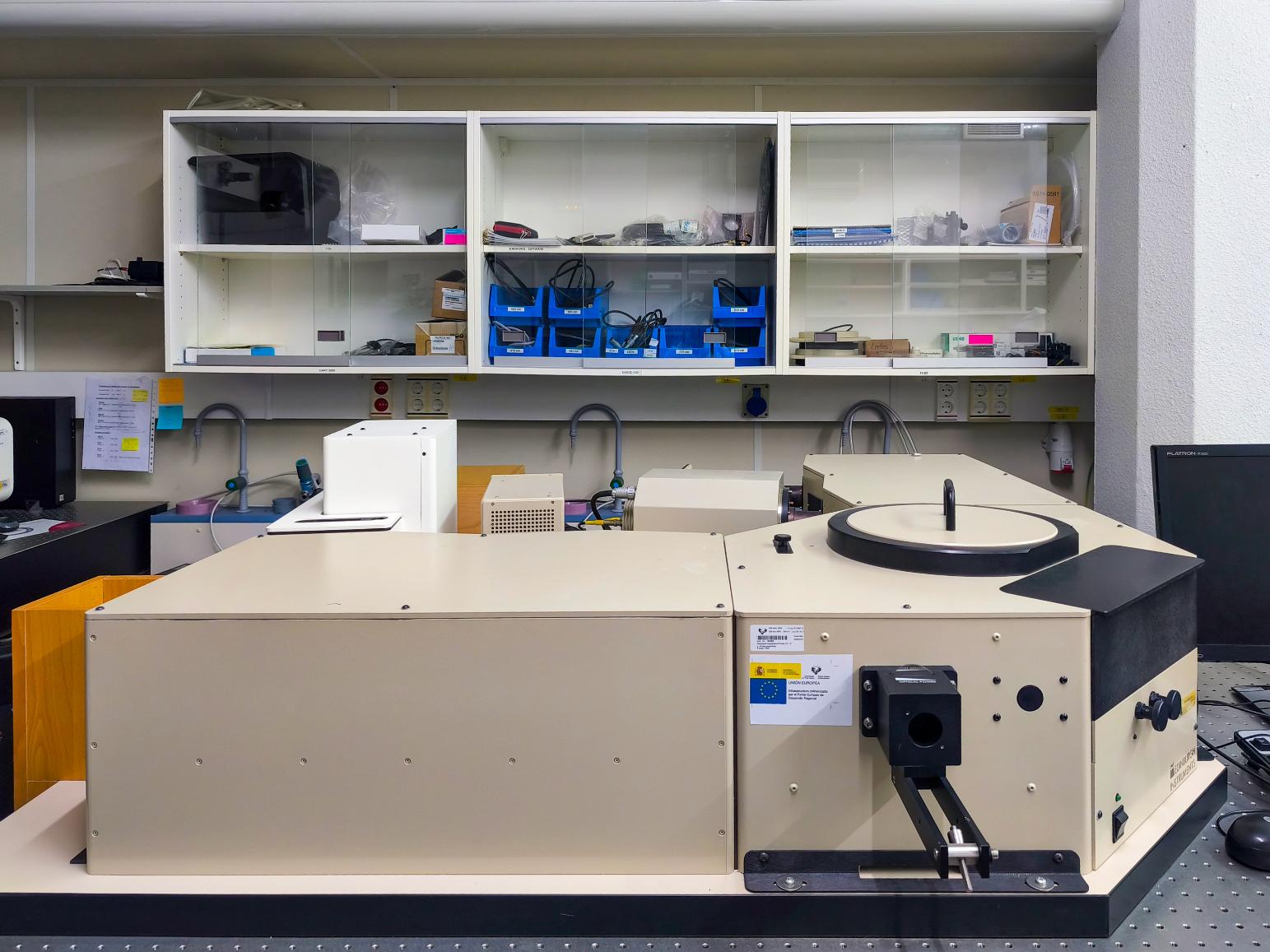
FLS920 (Edinburgh Instruments): steady state and time-resolved spectrometer modular system for solid, liquid, powders and film samples equipped with double monochromators on both excitation and emission arms. Excitation sources: xenon flash lamp 450 W, xenon microsecond flashlamp (μF920) with repetition rates up to 100 Hz and fianium supercontinuum wavelength-tunable laser with 150 ps FWHM pulses and repetition rates 40MHz-0.1MHZ. Detectors: photomultichannel tube, PMT (Hamamatsu R2658P), microchannel plate detector MCP (Hamamatsu C4878) with picoseconds time resolution (≈100 ps) and NIR InGaAs (Hamamatsu G8605-23).
Accessories: Glan Thompson polarizing prism for linear polarized measurements, Liquid Nitrogen cryostat (Optisat DN) and temperature controller (ITC601) from Oxford Instruments; integrating sphere for powder samples; Magnetic Stirrer; Sample Holders for powders, thin-Films and solids; FAST software package for advanced fluorescence lifetime analysis and includes features such as lifetime distribution analysis and exponential components analysis.
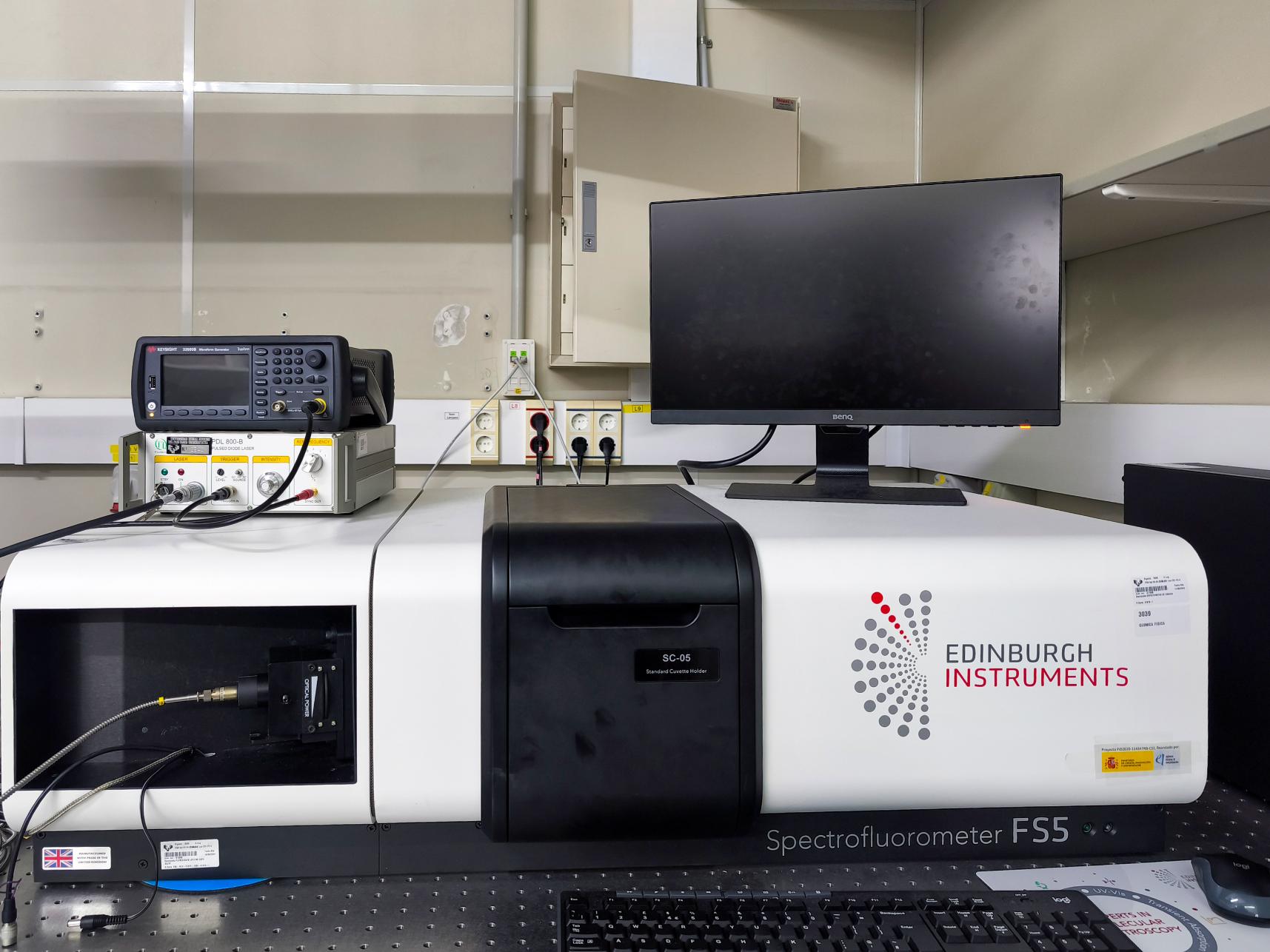
FS5 (Edinburgh Instruments): integrated steady state and time-resolved spectrometer system. Excitation sources: Xe flash lamp 150 W, 5W pulsed Xe microsecond lamp and picosecond pulsed diode laser (PicoQuant LDH Series: 370 nm, 410nm, 470 nm, 500 nm, 530 nm and 595 nm) with 100 ps FWHM pulses and repetition rates 40MHz-1MHZ and PDL-800 driver to control repetition rate and pulse energy (1-10mJ). Detectors: PMT 980 (extended). MCS and TCSPC fluorescence lifetime modes.
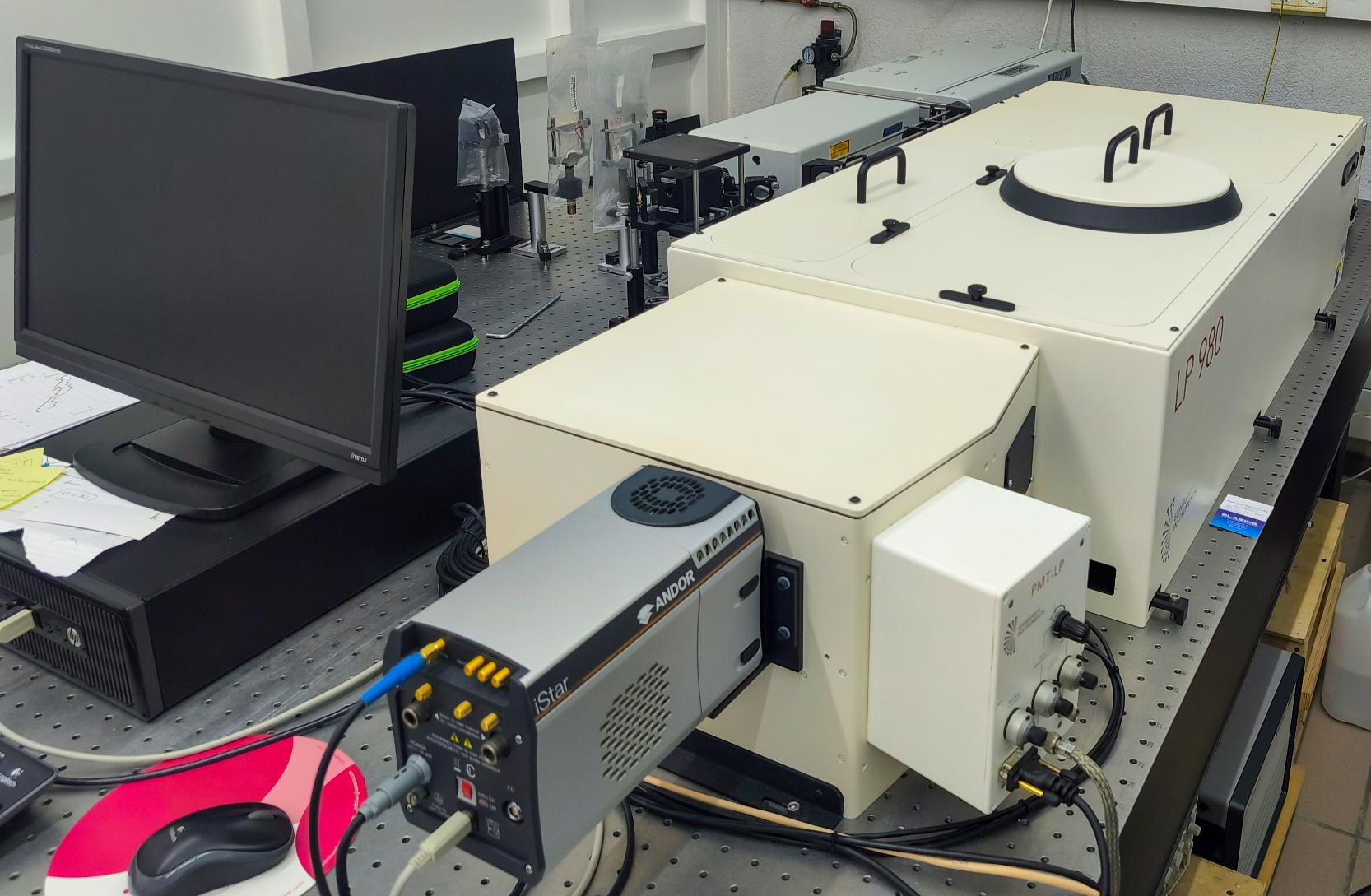
LP980 (Edinburgh Instruments): Transient Absorption and Laser-Induced Fluorescence Spectrometer Excitation sources: Xe lamp of 150 W (probe beam) and Nd:YAG laser coupled to OPO system (pump pulse beam) from LOTIS (TII 2134) operating at 1-10 Hz, pulse width of 7 ns, UV (355 nm, 100 mJ) and Vis/NIR (410-2000 nm); Detectors: PMT (Hamamatsu R928) 200nm-870nm) for kinetic mode and gated ICCD camera for spectral mode. Sensitivity (single shot): ∆OD=0.002 and ΔOD=0.0005, respectively. Accessories: Liquid Nitrogen cryostat (Optisat DN) and temperature controller (ITC601) from Oxford Instruments; Cross-Beam Geometry and Diffuse Reflectance sample holders.
laser efficiency and photostability studies of dye solutions are done with Nd:YAG laser coupled to OPO system by transversely pumped at a repetition rate of 1 Hz. The exciting pulses are line focused onto the cell using a combination of positive and negative cylindrical lenses (f = 15 cm and f = -15 cm, respectively) perpendicularly arranged. The plane parallel oscillation cavity (2 cm length) consisted of a 90% reflectivity aluminum mirror acting as back reflector, and the lateral face of the cell acting as output coupler (4% reflectivity). The pump and output energies are detected by an Ophir powermeter. The photostability is evaluated by using a pumping energy and geometry exactly equal to that of the laser efficiency and it is monitored by the decrease in laser- induced fluorescence (LIF) intensity.
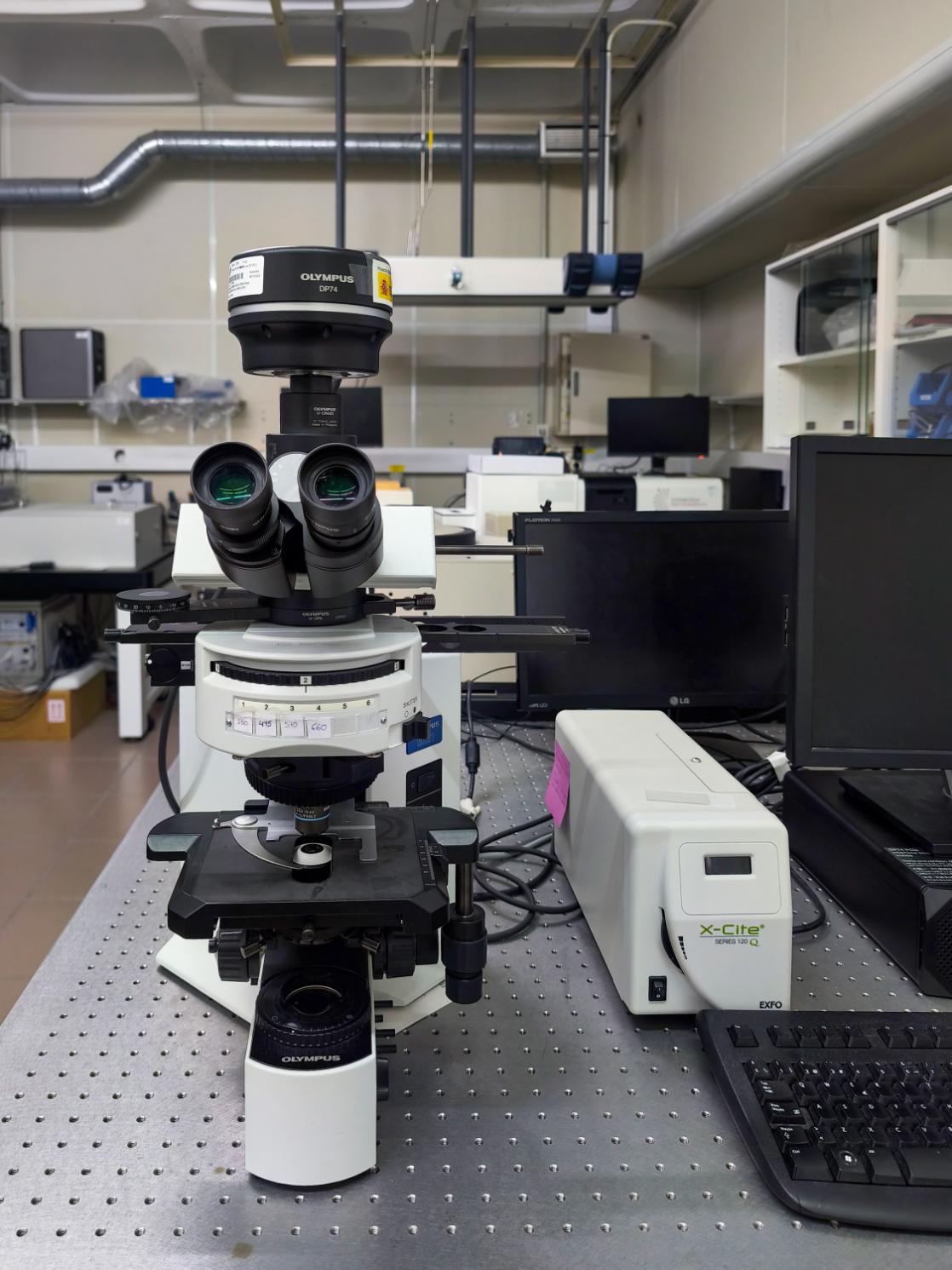
Optical microscope Olympus BX51 (Evident): optical upright wide-field microscope with epi configuration for transmission and fluorescence imaging equipped with X-Cite 120Q Mercury Vapor Short Arc (120W) excitation source, Chroma filters (band pass, dichroic and cut off) for each UV/Vis region and color CCD camera (DP74, Evident) for imaging registration. Software: Olympus microscope is fiber coupled to Edinburgh spectrofluorimeter FLS920 to allow the registration of fluorescence spectra of small areas (i.e. single particles). Software: PRECiV
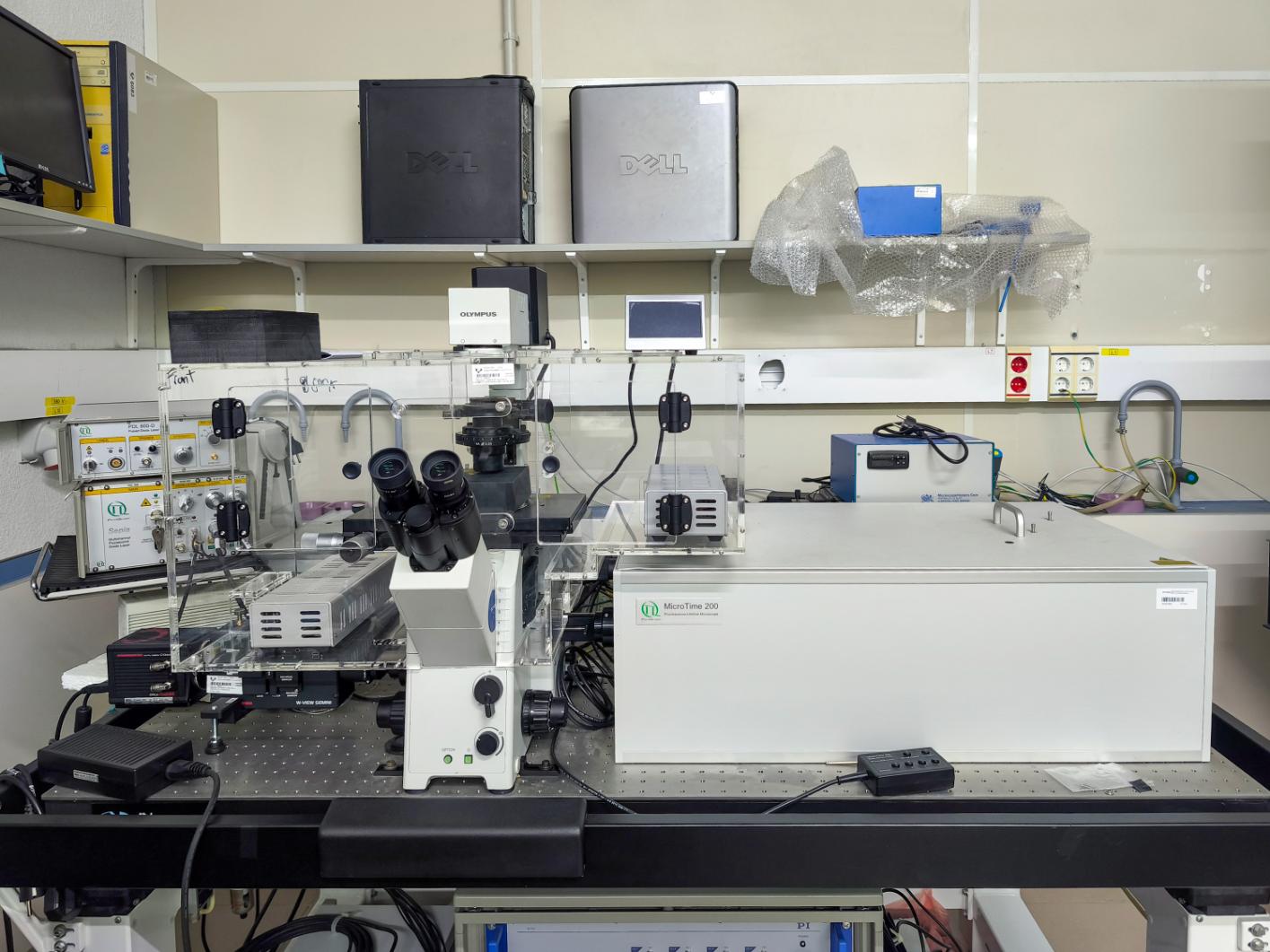
Microtime 200 (PicoQuant): Confocal fluorescence microscope with temporal resolution of 100 picoseconds and single molecule sensitivity. Excitation sources: Laser Combining Unit (LCU) with picosecond pulsed diode lasers (PicoQuant LDH Series: 410nm, 470 nm, 530 nm and 640 nm) with 100 ps FWHM pulses and repetition rates 40MHz-1MHZ and SEPIA driver to control repetition rate and pulse energy (1-10mJ). Detectors: Single Photon Avalanche Diodes, SPAD (PDM Series designed and manufactured by Micro Photon Devices, MPD). Microtime also provides spectral resolution by coupling the spectrograph Shamrock 303i and Newton EMCCD camera in a side port.
Software: SymPhoTime 64
Applications: Fluorescence Correlation Spectroscopy (FCS), Fluorescence Lifetime Imaging (FLIM), Fluorescence Lifetime Measurements, Fluorescence Intensity Time Traces, Fluorescence Anisotropy, …
Recently, updated with video imaging including high- power white LED (Thorlabs), and GEMINI sCMOS and V-Wiew camera, Hamamatsu), hyperspectral imaging (470 nm laser in continuous and pulsed mode and PDL800 driver, Picoquant) and chamber with temperature control.
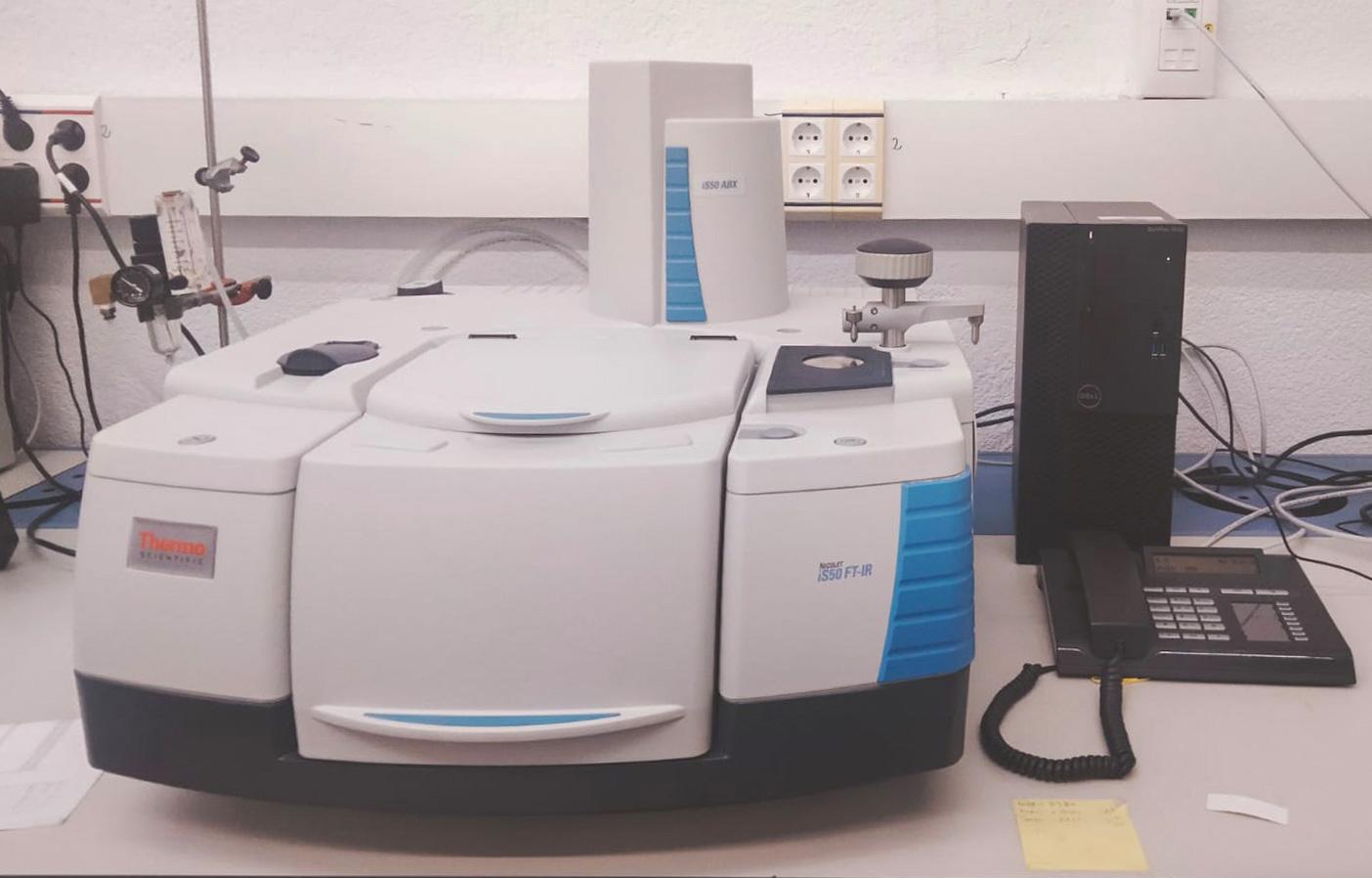
FTIR (Thermo Scientific Nicolet iS50): Spectrophotometer operating in Fourier Transform (FTIR) mode for Mid and Far IR (7800 -50 cm-1) with high resolution (0.09 cm-1) and high sensitivity. Detectors: DTGS/KBr for mid-IR and DTGS/PE for far- IR. Automatic beam splitter exchange for different IR region and purging system. Accessories: Attenuated Total Reflection (ATR); diffuse reflectance (DRIFT); Grazing-angle reflectance (GA-FTIR), VEEMAX III.
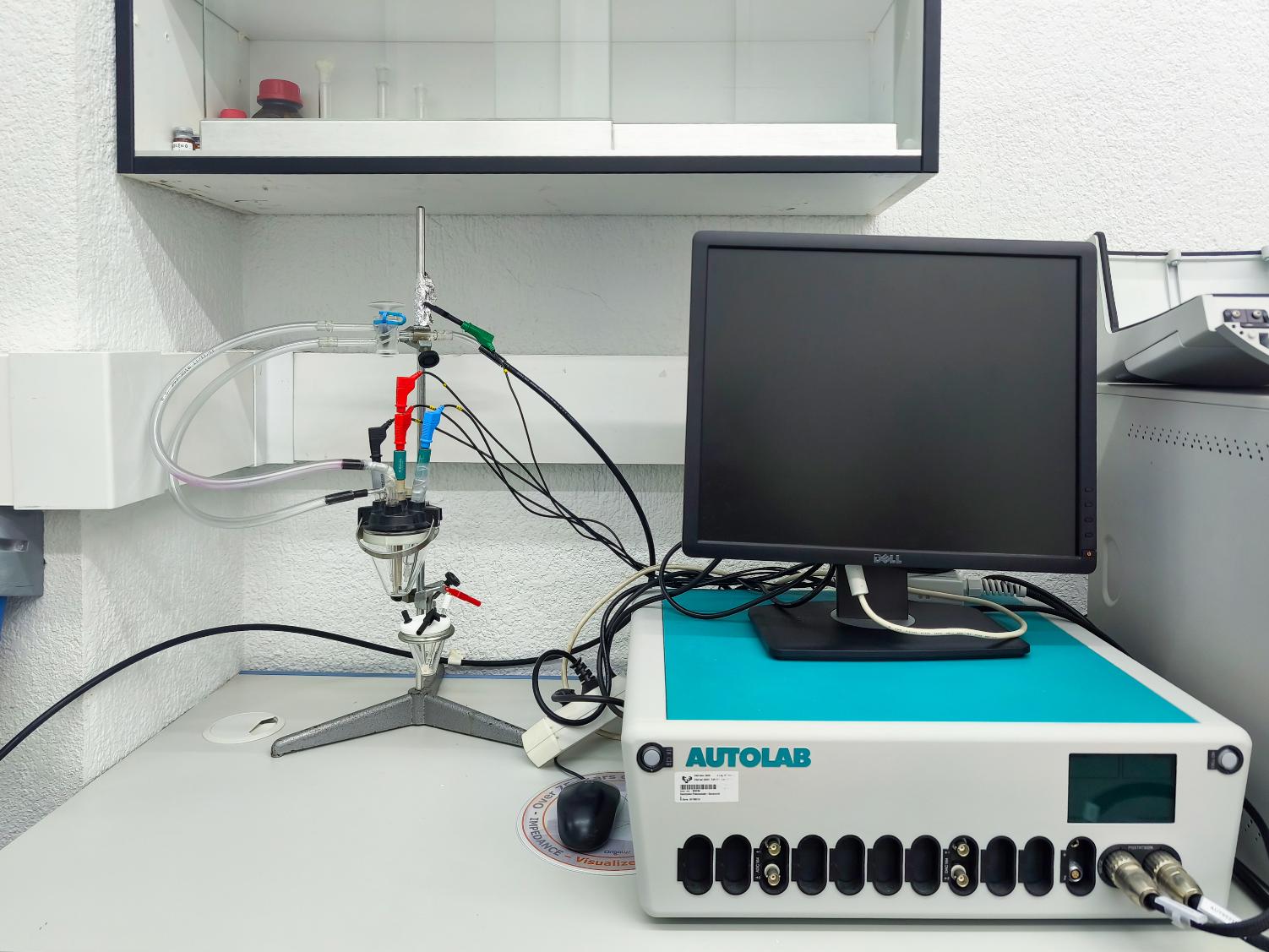
Metrohm Autolab: three-electrode setup for the measurement of anodic and cathodic currents and redox potentials in solution. Platinum disk (diameter 3 mm) or layer (surface of 8 x 7.5 mm) as working electrode, platinum wire as counter electrode and Ag/AgCl as reference electrode (Metrohm). Measurements performed under an inert atmosphere. Miniaturized vessels and electrodes for measurements at low volumes (Origalys).
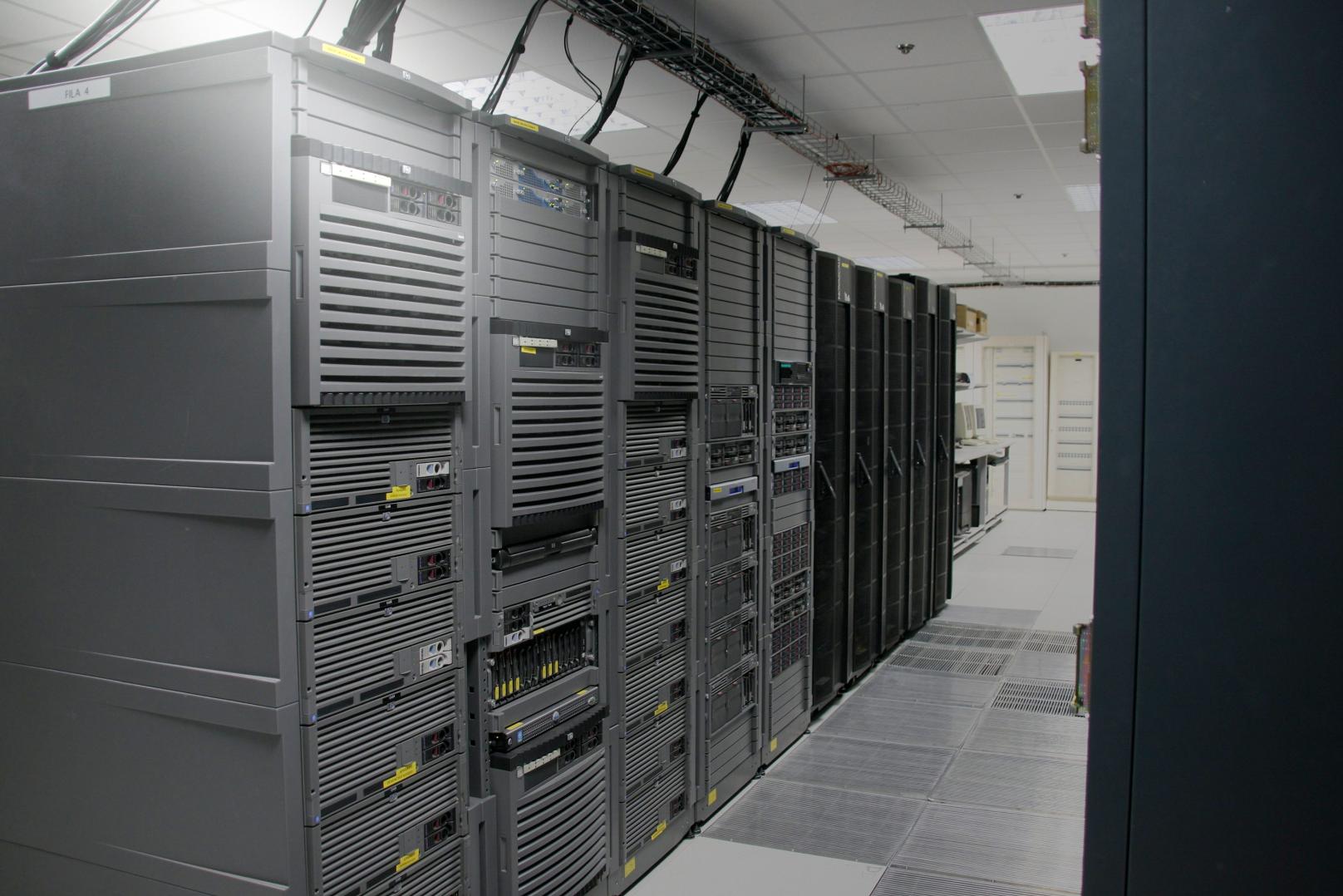
Access to the advanced computing clusters of the UPV/EHU (Arina and Agamede) and the DIPC (Atlas EDR, Atlas FDR, and Hyperion), each offering substantial computational resources for conducting complex simulations and calculations across various scientific disciplines.
Arina features a total of 3,728 cores distributed across nodes with RAM capacities ranging from 16 GB to 512 GB. It includes nodes equipped with dual Nvidia Tesla GPUs and Nvidia Kepler GPUs, supporting a range of computational tasks from molecular dynamics to large-scale data analysis.
Agamede houses 3,648 processors with RAM configurations ranging from 768 GB to 1.5 TB. This cluster includes nodes powered by AMD EPYC Zen4 processors, with some nodes featuring additional Nvidia A100 GPUs (80 GB each).
Atlas FDR offers 6,116 cores with 60 TB of RAM memory equipped with FDR InfiniBand technology. Despite being established earlier, it continues to provide substantial processing power suitable for a wide range of scientific computations, including computational fluid dynamics and computational physics.
Atlas EDR utilizes EDR InfiniBand technology and hosts 2,656 cores with 16 TB of RAM memory. It incorporates Nvidia RTX 3090 and P40 GPUs, enhancing its capabilities for tasks requiring accelerated computing, such as machine learning and quantum chemistry simulations.
Hyperion is equipped with 14,000 cores and 150 TB of RAM, but it is planned to expand it to 30,000 cores and 300 TB of RAM, providing extensive computational power for large-scale simulations in fields such as astrophysics, climate modeling, and advanced materials research.
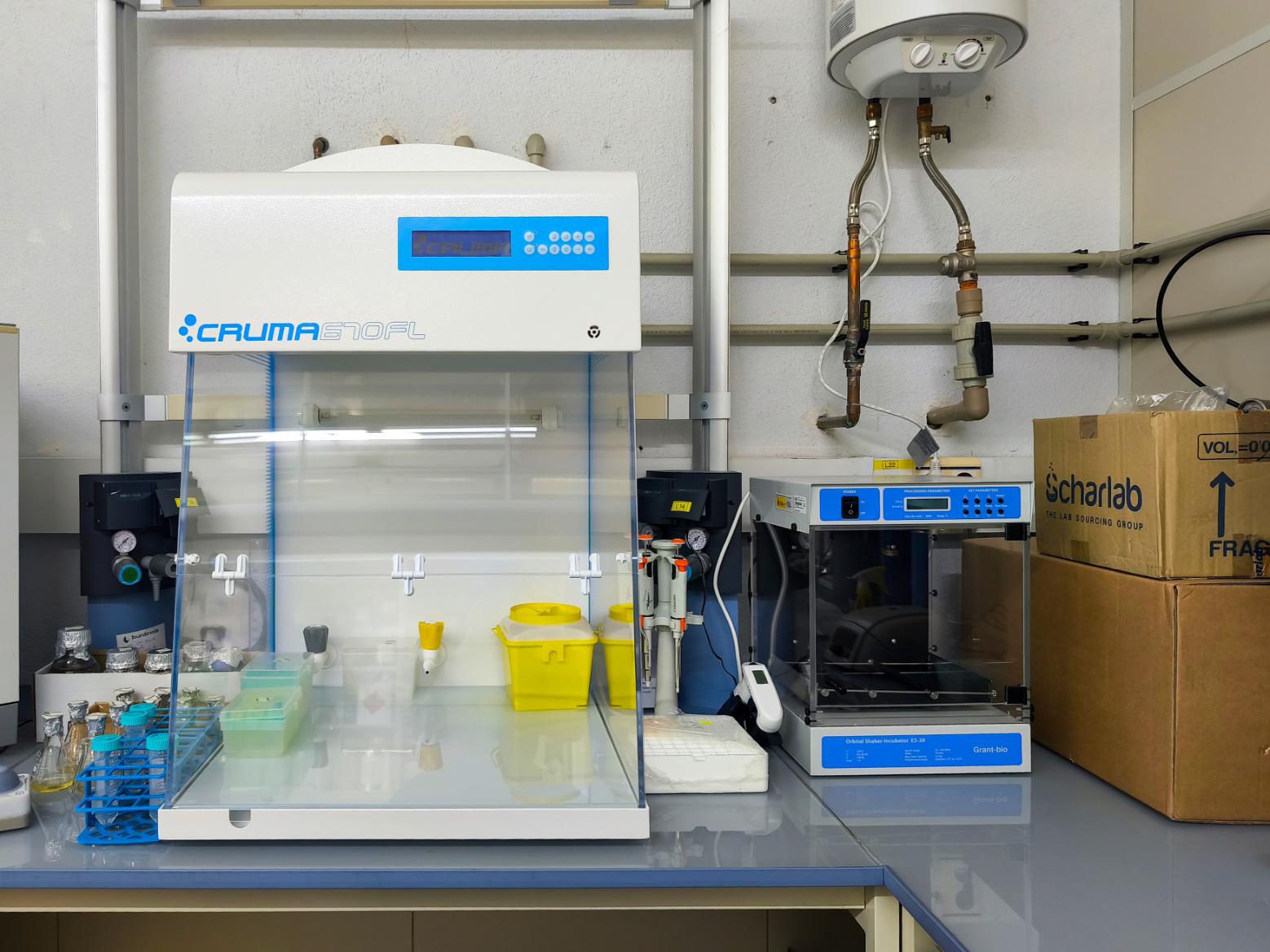
Orbital Shaker-Incubators (Grant-bio): Compact shaker-incubator ES-20 with 10mm orbit and temperature control range: ambient +5oC to 42oC.
Resumen de privacidad

Esta web utiliza cookies para que podamos ofrecerte la mejor experiencia de usuario posible. La información de las cookies se almacena en tu navegador y realiza funciones tales como reconocerte cuando vuelves a nuestra web o ayudar a nuestro equipo a comprender qué secciones de la web encuentras más interesantes y útiles.